Craft · Palestine · June 28, 2026 · 7 min read
Tatreez: the language mothers stitched when nothing else could be carried
تطريز
 Hero imageArtisan hands mid-stitch — red thread on black thob fabric, macro
Before Instagram told you where someone was from, a dress could. In Palestine, the patterns stitched across a woman's thob were a postcode: cypress trees meant one village, eight-pointed stars another, a particular red another still. You could read a person's hometown from across a wedding hall.
Tatreez — Palestinian cross-stitch embroidery — is one of the oldest continuously practiced textile traditions in the world. It survived because it required nothing that couldn't be carried: a needle, thread, and memory.
"My grandmother didn't own a photograph of her village. She owned its pattern. She stitched it onto everything."
A craft that refused to stop
After 1948, tatreez changed meaning without changing form. Patterns that once marked geography became acts of remembrance — village motifs stitched by women who could no longer walk those villages. Daughters learned patterns for places they had never seen. The stitch became the map, and the map became inheritance.
UNESCO inscribed tatreez on its list of Intangible Cultural Heritage in 2021. But the craft never needed the certificate; it had been certifying identity for centuries.
الغرزة ذاكرة، والذاكرة وطن
 ImagePattern comparison — Ramallah vs Gaza motifs, flat reference sheet
From the thob to the sleeve
When we designed the Tatreez Border hoodie, the rule was simple: the patterns are not decoration, they are quotation. Each sleeve border reproduces documented motifs — named, sourced, and credited on the hang tag. Nothing invented, nothing "inspired by." Quoted.
The lettering on the back is textured like a keffiyeh's weave for the same reason. These are not aesthetics borrowed from a culture; they are a culture's own vocabulary, carried forward on new fabric — with proceeds returning to the people who authored it.
That's the whole idea of Collection 001, really. You are not wearing a cause. You are wearing a language. And languages live longest when they are spoken out loud, on the street, in daylight.
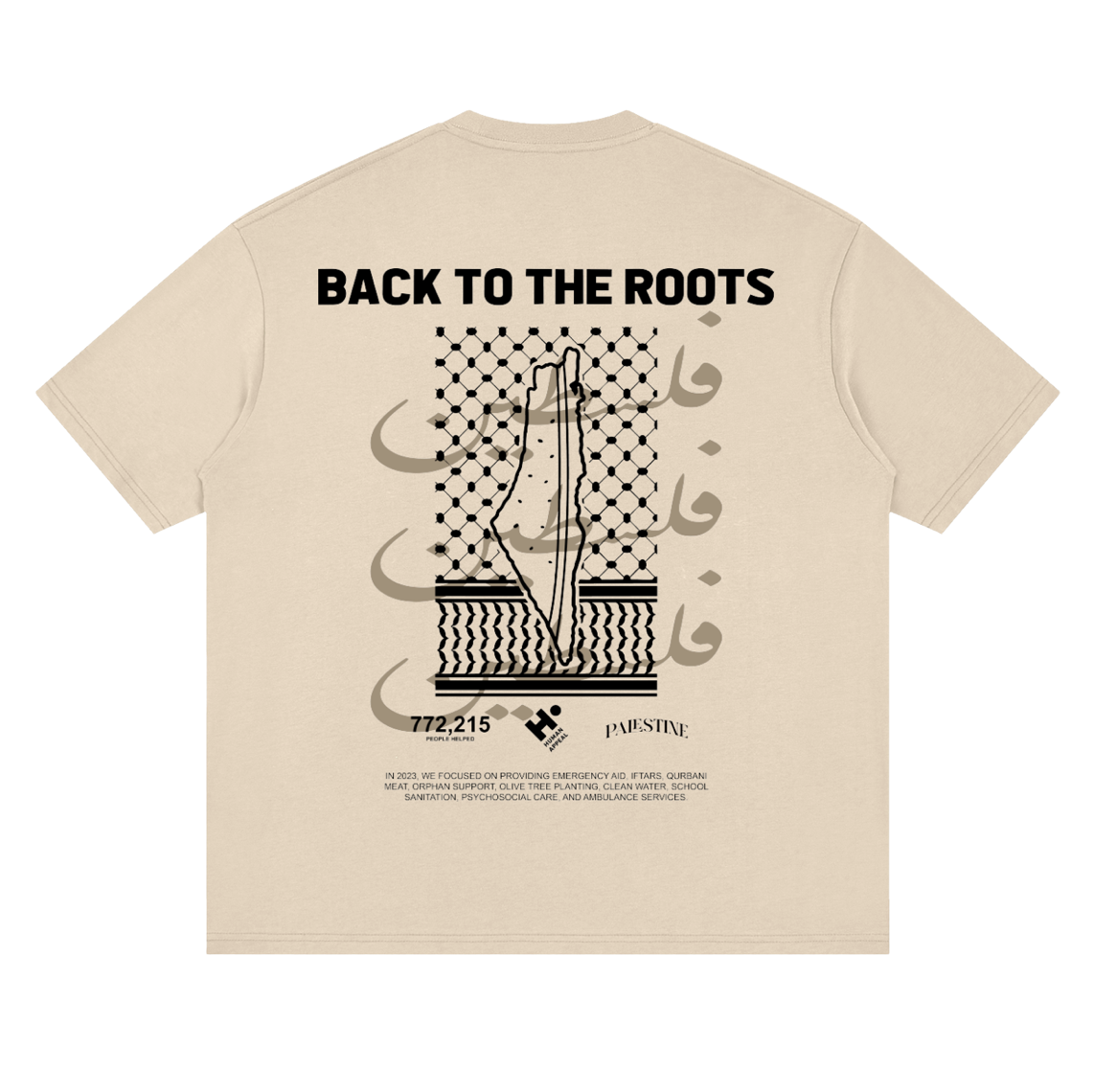 Palestine RootsKeffiyeh back print
From this Story
The Palestine Roots Tee
The map of Palestine set inside a keffiyeh — the fishnet weave and tatreez zigzag printed straight into the graphic, فلسطين layered behind.
View the Piece